Giorgione.
Giorgio Barbarelli da Castelfranco 1477-1510
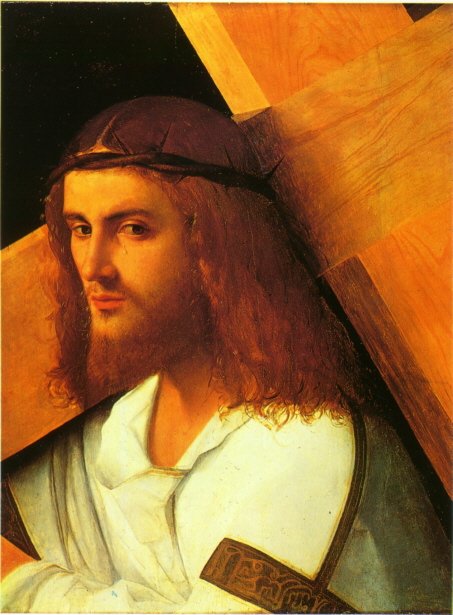
Giorgione. Christ carrying the cross.
Giorgione, a biography of the artist.
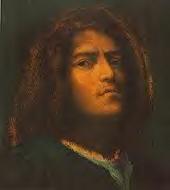
Giorgione, Giorgio Barbarelli da Castel Franco, was born in 1477 in the small town of Castelfranco Veneto, outside Venice.
Very little's known about his life and career with his origins being disputed. Some authorities claiming his father came from the great Barbarelli family and his mother a peasant girl of Vedelago. While later investigators find no proof of this, and call the Barbarelli tradition false. Making Giorgione the descendant of peasants from the March of Treviso.
Giorgione means big George, Ruskin calls him stout George, but all agree that he was a large, handsome man. Being of splendid and attractive presence and known to be a great lover and musician. Particularly showing great skill on the lute and having a good singing voice.
With these credentials, he quickly became welcomed into Venetian society and painted many portraits of Venetian aristocracy. These included Caterina Cornaro, Gonzales (Gonzalvo) of Cordova,
Its also believed that he travelled to Venice at an early age. Studying alongside Tiziano Vecelli under the Venetian painter Giovanni Bellini and they lived together in his house.
His talent developed quickly and he soon rivalled and then surpassed his teacher. Even Titian began following his teachings and imitating his colour, method, and style. Resulting in much confusion as to what works actually accredit to Titian or Giorgione.
Giorgione's recognition.
A major influence in his life was meeting Leonardo Da Vinci when he visited Venice in 1500.
Giorgione quickly gained recognition for his work. Then in 1500, aged twenty-three Giorgione's chosen to paint portraits of the Doge Agostino Barberigo and the condottiere Consalvo Ferrante.
In 1504 comes a commission to paint an altarpiece in memory of another condottiere, Matteo Costanzo, in the cathedral of his native town, Castelfranco.
Then in 1507 he received, at the order of the Council a ten part payment for a picture. Subject not mentioned, on which Giorgione's engaged for the Hall of the Audience in the Doge's Palace.
In 1507-1508 he's employed along with other artists of his generation, to decorate with frescoes, the exterior of the newly rebuilt Fondaco dei Tedeschi (or German Merchants' Hall) at Venice. Having already done similar work on the exterior of the Casa Soranzo, the Casa Grimani alli Servi and other Venetian palaces.
He died young at the age of thirty-three from the plague which was rife at the time. Its thought that he caught it from his lover.
Very shortly after his death, in a letter to a Venetian friend. The great art-patroness and amateur, Isabella d'Este, requested that they try to secure for her collection a nocturne by Giorgione's hand. However, to her disappointment the reply was that the painting was not for sale at any price.
There's few if any signed and dated works of his in existence. There's also great debate as to what works belonged to him. Some believe that most the works of his time and in his style belong to him. However there's only about 6 truly credited to him.
The Tempest-La Tempesta. Giorgione (see below) has been called the first landscape in the history of Western painting.